
“Just a couple of changes” can mean fixing a discount code. It can also mean unpacking the camera, clearing another afternoon and filming a scene you thought was finished.
Before agreeing to the whole list, compare the sponsor’s notes with the brief, the concept they approved and any revision terms in your contract or emails. Ask what any vague notes mean before deciding how to handle them.
Fix requirements you missed, complete the edits included in your deal, and discuss a new fee and schedule when the brand changes the work. You can say yes to one note and propose different terms for another.
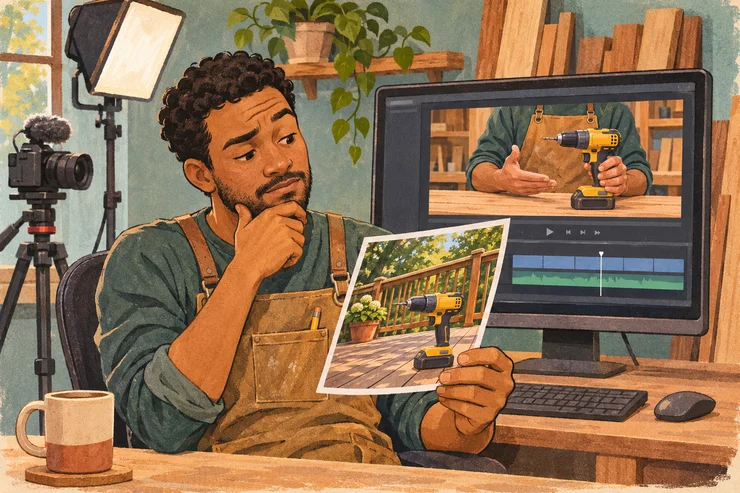
Let’s work through an example. You make woodworking videos on YouTube and have delivered a sponsored segment for a cordless drill. The brand approved a demonstration at your workshop bench.
Its feedback asks you to correct a discount code you mistyped on screen, then replace the indoor demonstration with footage of you using the drill to replace boards on an outdoor deck.
Both requests arrived in the same email. That doesn’t make them the same job.
Is it a correction, an included edit or new work?
The discount-code typo is yours to fix. You agreed to show the supplied code, and the draft doesn’t do that. If you overlooked a required talking point or mispronounced the product name, those need correcting too.
The outdoor deck scene changes the approved plan. You would need to find a deck you can work on, get materials, film again and edit the new footage. Explain that work before agreeing to do it.
An ordinary refinement sits between those cases. If the deal includes an editing round and the sponsor asks you to shorten a shot or swap in a close-up you already filmed, that can fit within the agreed work.
The camera isn’t what decides who pays. If the approved brief had called for an outdoor demonstration and you skipped it, filming outside could be your correction to make. Likewise, a change made entirely in editing can still be extra work if it replaces the agreed direction or exceeds the included rounds.
Sponsorship coach Justin Moore recommends negotiating separate terms for re-edits and reshoots. His proposed approach covers reshoots needed because the creator departed from the approved brief, while additional work outside that agreement gets a separate fee discussion.
If your agreement never defined revisions, start with what it did define: the video, approved concept and deliverables. Explain what the new request adds, then agree on the remaining work and any extra cost. For example, offer one collected editing pass on the existing footage and quote separately for new scenes. Ask the sponsor to agree to that plan before you proceed.
Sometimes the brief itself is the problem. If it only said “show the drill in real-world use,” you might have pictured the workshop while the sponsor pictured a deck. Ask which requirement they feel is missing, show the concept they approved, and propose a fix you can both accept. If neither side settled the location, discuss the extra cost and timing instead of treating either interpretation as an obvious breach.
Get one set of feedback you can actually use
A request to make the segment feel “more premium” leaves you guessing. Ask which moment isn’t working and what the brand wants viewers to see or understand instead. That might reveal a straightforward fix: the drill’s controls are hard to see in the wide shot, and a close-up would help.
For each note, ask for a timestamp, the issue and the requested change. If the sponsor wants different wording for a product claim, get the wording before recording again. If the requested claim goes beyond what you’ve tested or can substantiate, ask for accurate wording instead.
Then ask your contact to gather everyone’s feedback before you edit. Otherwise, marketing can ask for a shorter introduction on Tuesday and a product manager can ask you to put it back on Wednesday. They need to resolve that disagreement before sending you the instructions.
Creator-marketing platform Cohley asks brands to consolidate their team’s feedback into one message. You can agree on the same process when working directly with a sponsor: one contact sends the complete set of notes, you make the agreed changes, then submit the revised draft. That is one revision round.
If you’ve completed the included rounds and a new reviewer sends more preferences, explain that this would be another round and propose a fee and delivery date. If you missed an agreed correction, though, finishing it doesn’t become a newly chargeable round.
Check what the sponsor is reviewing as well. Did you agree to review of the sponsor segment or the entire video? If notes reach into unrelated material, ask how they connect to the agreed review or restrictions on what can appear alongside the brand.
How to reply when the sponsor wants more
Return to the drill example. Suppose you also filmed some unused close-ups at the bench. If the brand’s concern is showing the drill more clearly, those shots could solve it without another shoot. Ask about the purpose of the change before assuming a new location is the only answer.
Your reply can offer that possibility while asking what the brand needs:
Hi Jordan,
Thanks for catching the discount-code typo. I’ll fix that in the next version.
The outdoor deck scene would be a new shoot beyond the workshop demonstration we agreed on. I’d need to arrange and film the deck repair, then re-edit the segment. I’d quote for that separately and agree on new draft and publication dates with you.
If the aim is to show the drill more clearly, I have unused workshop close-ups that I can add within our included editing round. I can send that version, with the corrected code, by [date].
Would you prefer that edit, or a quote and schedule for the outdoor shoot? Please also send any remaining team feedback together so I can handle it in the same pass.
Thanks, [Your name]
For the new shoot, estimate the preparation, filming and editing time, then add materials, travel or hired help. Use that workload to price the extra work; the original segment fee doesn’t tell you what this change will cost. Include how many feedback rounds that new quote covers. If the shoot doesn’t fit your schedule or channel, say so and offer to finish the agreed workshop version.
You can also choose to include a small extra change as goodwill. If a long-term sponsor needs a quick tagline update, doing it may be easier than negotiating a separate fee. Be clear about what you’re including: “I can add that change in this pass at no extra charge.” You don’t have to reopen the whole agreement to make a small, deliberate concession.
Leave time for the next review, not just the edit
An edit that takes twenty minutes can still need another export, upload and round of approval.
In a 2021 account of her sponsorship workflow, YouTuber Cathrin Manning described filming sponsored videos two weeks or more before publication, compared with her usual one week. She sent unlisted drafts through her management to the brand. Corrections meant editing, uploading another version and sending it back for review.
That waiting time belongs in your schedule. If feedback arrives late, tell your contact what you can now deliver and when you need their approval. For example: “With the notes arriving today, I can send the revision on Thursday. Can your team approve it by Friday for a Monday upload?”
For changes that need new filming, agree on the extra fee, draft date and publication date before starting. Get those terms confirmed in writing so you’re both planning around the same version of the deal.
Where the agreement requires approval before publication, ask the sponsor to approve the exact final draft link. An unanswered email isn’t approval by default. If the brand stops replying, follow up with a proposed publication date and the approval deadline it needs. Keep the sponsored upload unscheduled until the required approval arrives, and agree on a new slot when they respond.
Check your payment terms too. If invoicing depends on approval or publication, a delayed sign-off can delay payment. When agreeing on extra work, confirm what remains to approve in the original delivery, when you can invoice for it, and how the extra work will be billed. Don’t leave that discussion until after another shoot.
Set the review process before the next shoot
When you respond to the next sponsorship offer, settle four things before production:
- What they’re approving: the concept, talking points, demonstration and setting, plus which parts of the finished video they will review.
- What’s included: how many collected rounds of edits the fee covers, and how you’ll handle corrections versus changed direction or additional filming.
- Who sends the notes: one contact who gathers and reconciles feedback from the people who need to approve it.
- When each step happens: draft delivery, brand feedback, your revision, final approval and publication. Agree what happens to those dates if a step runs late.
For the notes in front of you today, start with the approved plan. You don’t need to reject every extra request or agree to all of them. Clarify anything vague, then tell the sponsor which corrections and edits you’ll make and which new work needs a separate quote. That gives both of you a way to finish the video.