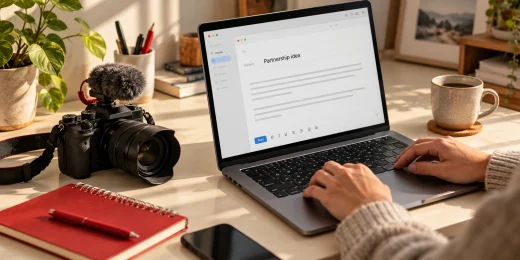

Say you make home-audio tutorials on YouTube and this arrives in your inbox. The names and offer are fictional.
Hi Alex,
I’m Sam from Brand A. We make an audio-editing tool for creators. I came across your tutorial on recording voiceovers at home and thought our tool could be a good fit for your viewers.
We’d like to sponsor a 60–90 second segment in your next YouTube video, plus one Short showing the tool. We can offer $1,200 and a three-month subscription.
We’d like the content live within two weeks and would also like to reuse it on our social channels. Could you send your rates and let me know if you’re interested?
Sam, Brand A
On the surface, Sam’s email looks pretty specific. You have deliverables, a two-week window, and $1,200 on the table, so it’s easy to jump straight to deciding whether that number works for you. Hold off on judging the fee just yet, though, because two phrases in that note leave the actual offer wide open.
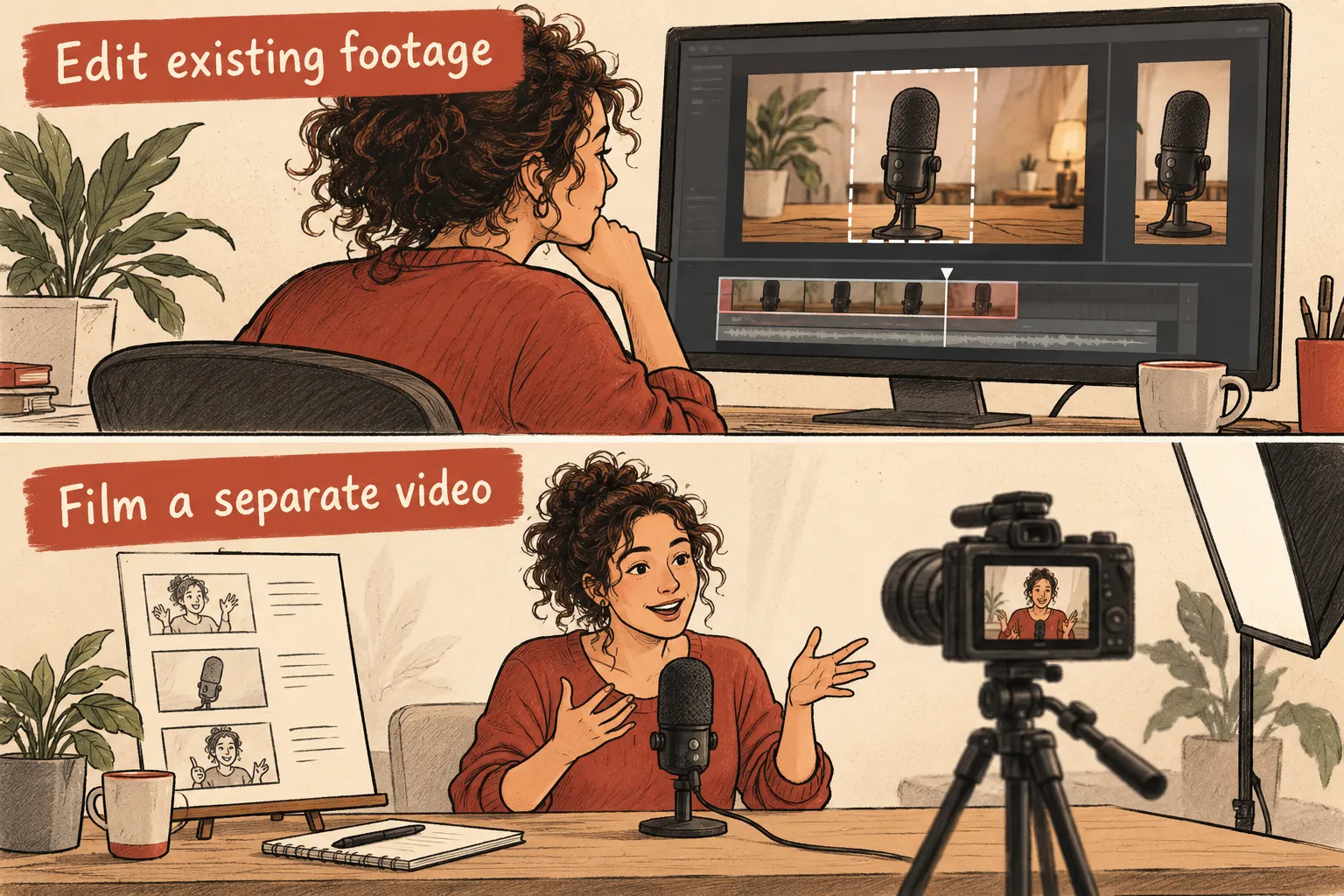
“One Short” could mean cutting a vertical clip from footage you’re already shooting. It could also mean coming up with another idea, writing another script, and getting back in front of the camera. Same line in the email. Quite a different job.
Sam also wants to reuse your content. You might be happy with a repost on the brand’s feed, but want a different fee if your face is going into paid ads for the next year. The email doesn’t tell you which they have in mind.
That two-week window also has to fit testing the software and waiting for feedback alongside production. And while Sam has told you how much the brand is offering, there’s no mention of when you’d get paid.
Sam asked for your rates and whether you’re interested. You can say yes to exploring the deal without saying yes to $1,200. Explain what you need to know before you can quote for the work.
A first reply you can adapt
Before requesting access or opening unfamiliar files, check that the sender actually represents the brand. YouTube recommends verifying sponsorship contacts through a publicly listed company number or a contact you already know.
Hi Sam,
Thanks for reaching out. This sounds relevant to my voiceover tutorials. I’d like to try the tool and hear a bit more.
Could you arrange trial access and send over the campaign brief? I haven’t used the software yet, so I’d need to test it before agreeing to feature it.
Thanks for sharing the budget. Before I quote for the package, could you clarify a few things?
- For the Short, do you want a vertical edit of the main segment, or a separate video with its own script and shoot?
- Where would you reuse the content, would it appear in organic posts or paid ads, and for how long?
- How much time do you need to review the content, and is the publish date flexible?
- What are your payment terms, including when payment would be due?
If the tool is a good fit, I can put together a quote once I have those details.
Best, Alex
When Sam replies
If the software disappoints in testing, you can thank Sam for the trial and decline. You haven’t promised to recommend it.
If you like the tool, Sam’s answers give you a package to price. Suppose Brand A wants a separately scripted Short and a year of paid ad rights. You can quote for the whole package or list the components separately so Sam can see what each costs.
If $1,200 is all the brand can spend and it doesn’t cover the work, consider whether there’s a smaller package you’d be happy to offer. That might mean a vertical cut instead of a separate shoot, or more limited permission to reuse the content. You can also pass if there’s no version of the deal that works for you.
Include any proposed change to the publish date with your quote, so Sam can consider the price, work and schedule together.
Can you make the deadline?
Look at your upload schedule before offering Sam a date. An audio-editing tool might suit your channel perfectly and have nothing to do with your next video. You’ll also need time to try it, make the content, and handle the brand’s review. If access or feedback arrives late, how much filming and editing time would you have left?
If you need more time, explain what the work involves and propose a date you can meet. Creator Jon Conti describes doing this for an agency’s Black Friday campaign for Suunto. The agreement called for a five-day turnaround. His outdoor testing required travel and conditions he couldn’t reproduce at a desk, so he declined.
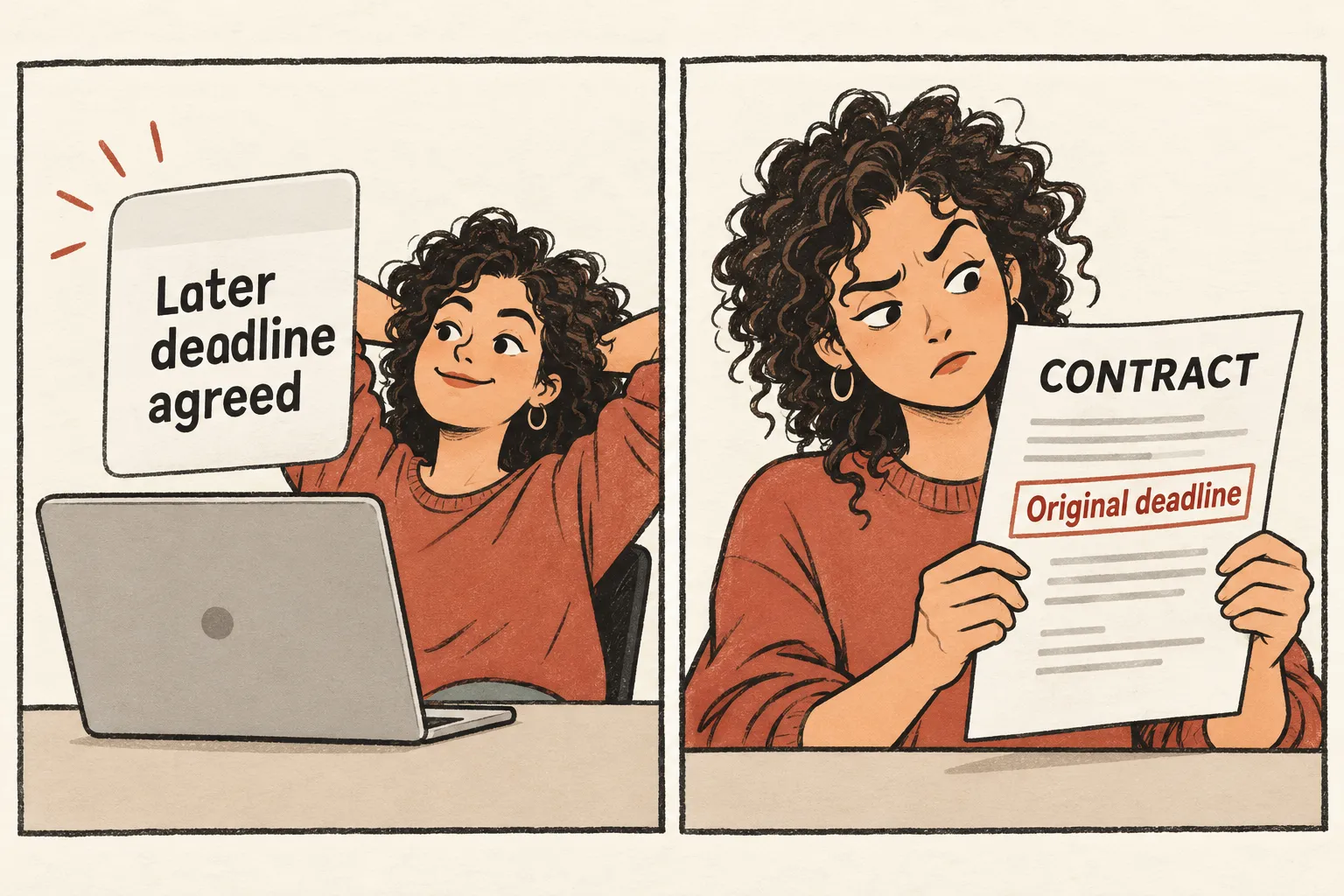
When the agency asked why, he explained what the testing required. They agreed to a later schedule. Then the next agreement arrived with the original deadline still in it.
Conti asked for a correction before signing. Later, the earlier deadline resurfaced anyway. He pointed back to the revised agreement and says the issue was resolved.
If your offer looks different
You won’t need that whole list of questions for every email. If you already use the product and the brand has spelled out the work, schedule, usage rights and payment terms, you may have enough to send a quote immediately.
If a brand emails you with little more than “We’d love to collaborate,” you’ll need to find out what it has in mind. Reply with a couple of sponsorship formats that fit your channel, then ask about the campaign, budget and timing.
For a product-only offer, check whether the brand expects a video in return. You might be happy to try a free product with no obligation to post, but a promised upload means setting aside production time.
If the brand offers affiliate commission, ask whether it will also pay you a fixed amount for making the sponsored content, or whether you would only earn money when viewers buy through your link. You could write: “Do you have a budget to pay for the video as well as offering commission on sales?”
And if you already know the product isn’t right for your channel, a brief thank-you and a polite decline will do. You don’t need to negotiate your way out of an offer you don’t want.
Before you sign or start production, read the agreement against what you settled by email. Check the fee, what you’ll make, the draft and publish dates, the review process, where and how long the brand can reuse the content, and when you’ll be paid. Conti had already agreed on a later deadline when the old one turned up in his paperwork. If something doesn’t match, ask for a corrected agreement before signing.