

You want more YouTube sponsors. One website offers a database of brands. Another lets you list a sponsored video for sale. A third wants to represent you. They all promise to help with brand deals, but you’d be buying very different kinds of help.
Choose the job you need done first. If you don’t know which brands to approach, a research tool could help. If brands already ask for your rates and availability, a booking page could make those conversations easier. And if you’re spending your filming days negotiating and chasing invoices, you might want a person to handle the deals.
These routes can work together. You can receive inquiries through YouTube while approaching brands yourself. If you hire an exclusive representative, agree how they’ll handle work that arrives through other services too.
| What you need | Where to look |
|---|---|
| Brand inquiries inside YouTube | YouTube Creator Partnerships |
| List packages in a creator marketplace | Collabstr |
| Organize bookings or seek business-focused campaigns | Passionfroot |
| Brands to research and approach | SponsorRadar or Sponsorship.so |
| Someone to pitch and manage deals | A talent representative, such as Digital Fox |
Prices and access were checked on 2 November 2026. This comparison covers the services’ published offers and our limited free-account checks; we haven’t tested paid bookings or compared earnings.
Check what you already have in YouTube Studio
Before signing up elsewhere, look for Creator Partnerships under Earn in YouTube Studio. YouTube’s eligibility requirements include being at least 18, belonging to the YouTube Partner Program in an available country or region, following monetization policies and having no active Community Guidelines strikes.
Eligible channels are discoverable to brands. Creator Partnerships gives you a media kit showing your audience, desired-rate settings and a place to receive inquiries. The amount in an inquiry is the advertiser’s starting figure. You still negotiate the work, sign the contract and arrange payment directly with the advertiser or the agency running its campaign.
If you aren’t in the YouTube Partner Program, skip this route for now. The services below have their own application and access rules.
Give brands a place to book you
A booking page lets you show what you make, who watches and what you charge. A marketplace also gives brands a way to discover you. For a public listing with packages brands can buy, look at Collabstr. For organizing bookings from sponsors you already know, compare Passionfroot’s own-sourced deal pricing. It also has a separate network for finding new sponsors.
Collabstr: list packages and apply to campaigns
On Collabstr, you create a page with your services and prices. Brands can order from that page, and you can apply to posted campaigns. You can accept or decline an order.
There is no upfront cost, and Collabstr takes 15% when you make a sale, according to its creator FAQ. On a $1,000 booking, that fee is $150. The buyer’s payment is held until the work is completed and approved by the brand, so agree on the deliverables and revision limits before filming. Check the supported-country list in the FAQ before setting up your profile.
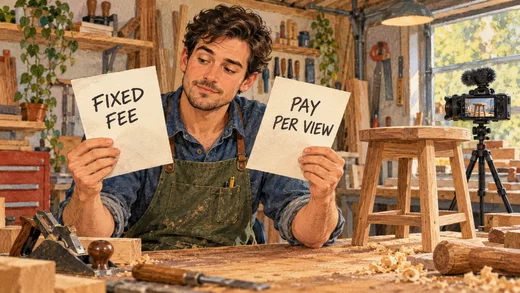
Define one package a brand can understand: a sponsored segment in a YouTube video, its length and what’s included. Quote for that work and any permission to reuse the footage. Our guide to sponsorship payment arrangements explains fixed fees, view-based payments and commission.
Collabstr also supports UGC, where a brand buys content to use itself. In your listing, say whether you’ll publish to your channel or supply footage for the brand. Filming a clip for a company’s ad and reaching your own subscribers are different things to sell.
Passionfroot: a booking page and a business-focused network
Passionfroot lets you build a storefront for your own sponsors and seek work through its network. Its setup guide walks you through adding your channel, audience figures, offerings and prices, then setting up payments and sharing the page. You can receive a booking request before settling on a publication date.
The two ways of finding work have different costs:
- You bring the sponsor: no monthly subscription or creator fee on that deal; the brand pays a platform fee on top.
- Passionfroot’s network brings the sponsor: it deducts 15%, including payment fees. Its pricing rules apply that fee to repeat bookings with the same network-sourced partner too.
For a $1,000 deal, that means you keep the $1,000 if you brought the sponsor, or $850 if the network introduced you. Collabstr’s published 15% transaction fee applies to sales through its platform, so compare the fee as well as the booking features before moving an existing sponsor there.
Audience fit matters when looking for new work. Passionfroot says most brands in Discover, its campaign and brand-discovery area, sell to businesses, including software engineering, sales and marketing companies. A channel teaching business software has a clearer reason to investigate this network than a channel about garden wildlife.
Discover requires profile approval and Stripe setup, and prioritizes business-focused creators with previous brand collaborations and engaged audiences. Creating a storefront alone doesn’t unlock it. If you’re approved, read the live briefs and apply with your audience, proposed content, price and available dates.
Find brands to approach yourself
If you want to start conversations instead of waiting for inquiries, look at recent uploads from related channels and note their sponsors. Our guide to finding YouTube sponsors explains how to turn those observations into a shortlist and find a contact. Try that first if you only need a few prospects.
A database is worth investigating when that search takes time you’d rather spend pitching or filming. SponsorRadar and Sponsorship.so collect brand and creator information to help you find prospects. Neither subscription buys you a campaign booking.
SponsorRadar
SponsorRadar’s Creator Pro plan offers brand and channel search, matching, watchlists and contact tools. Its current early-access offer is $1 for seven days, then $29 per month for one channel.
Our free research account asked us to upgrade when we opened Brands, so we couldn’t assess the full database’s coverage. If you try the paid access, check whether it finds relevant channels and sponsor examples in your niche before relying on its suggestions.
Sponsorship.so
Sponsorship.so’s Pro plan costs $89 per month on monthly billing. It includes searchable brand and creator data, contacts, alerts and outreach tools.
Our existing free research account showed a sample of 15 brands, with an upgrade required for full access. The visible rows included categories, mention counts and links to source videos. Those video links let you inspect what a creator actually said about the product, instead of choosing prospects from a logo and a number.
For either database, look for channels serving viewers like yours and products you could sensibly feature. A brand might appear through a paid integration, an affiliate offer or an unpaid recommendation. Open the original video to see what the creator says about the relationship and how the product fits the content.
The price difference doesn’t establish which database has better coverage for your channel. If you try one, use the first session to search for related creators and inspect a few source videos. Judge it on the usable prospects it helps you find.
Hire a person when you want help running the deals
If finding brand names is easy but negotiating, organizing approvals and collecting payment consumes your week, another database won’t take that work off your hands. A talent manager or agency can handle those tasks for you.
Be clear about whom an agency represents. A marketing agency sending you a brand’s brief is buying work for its client. A talent representative you hire negotiates on your behalf.
As one example, Digital Fox describes its talent-management service as handling outreach, incoming inquiries, rates, contracts, campaign operations and invoices. It publishes no single commission percentage on that page; it says each deal comes with a presentation showing its fee. Ask what you would receive from a proposed booking after the fee.
Also ask which deals the agreement covers. Digital Fox describes exclusive representation, so this is a broader commitment than listing a package on a marketplace. With any representative, ask whether they take channels at your stage, what work they’ll do and how you can leave. Clarify whether their commission also applies to deals you find yourself or receive through YouTube and marketplaces.
Talent representation doesn’t have to mean joining a multi-channel network, or MCN. Digital Fox explicitly says it isn’t one. With an MCN, YouTube says your revenue flows through the network’s AdSense for YouTube account, and the network typically takes a percentage before paying you. Joining an MCN is a different arrangement from using a sponsorship marketplace or a campaign network such as Passionfroot’s Discover.
Choose one useful next step
Choose one task for today: check Studio for inquiries, draft a package for a marketplace, or find three brands to approach.
Before paying for a tool, decide what would make it useful: relevant sponsor examples you couldn’t readily find, a usable contact route, or less time spent arranging bookings. For a representative, ask who would handle your channel and what that person would take off your plate. That gives you something concrete to compare with the fee.
Once an opportunity arrives, judge the offer on its own terms. Our guide to responding to a YouTube sponsorship offer helps you clarify the work, usage rights and payment before agreeing to it.