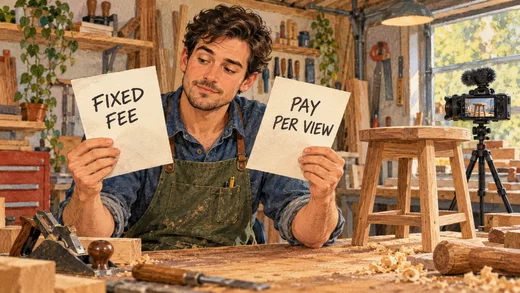


A brand asks for “one YouTube video.” That could mean a short sponsor segment inside your next upload, or an entire video built around its product. The same request can describe two very different jobs.
Offer an integration when the sponsor fits inside a broader video your viewers want to watch. Offer a dedicated video when the product can carry a useful or interesting episode of its own.
The choice affects more than the fee. It changes the reason people click, what you need to film, and which parts of the video the brand expects to review.
See the difference in two real videos
An integration gives the sponsor a defined portion of a broader video. It might be a distinct ad break or a product demonstration woven into the topic.
Creator Cathrin Manning’s lesson on how YouTube sponsorships work contains a handy example. About six minutes in, she introduces the music service Epidemic Sound, explains how she finds music for her videos and points viewers to a trial link. Around two minutes later, she returns to the sponsorship lesson. The music service gets its own segment; it doesn’t become the subject of the entire upload.
A dedicated video makes the sponsor or its product central to the whole concept. That can still be a tutorial, a challenge or a useful test.
Curly-hair creator Gena Marie’s Curlsmith-sponsored travel routine shows how. She teaches a low-maintenance routine using the brand’s products, including a conditioner that serves several purposes and saves packing space. The products run through the lesson instead of appearing in a short break. Viewers get help with their hair; the sponsor gets room to show how its products fit together.
Length alone doesn’t tell you which format the brand wants. An integration can occupy several minutes of a longer episode; a short tutorial built around the product can be dedicated. Describe the actual video when you agree on the format.
Choose a video your audience has a reason to watch
Start with what the brand wants viewers to do. Does it need a brief introduction and a link to try the product? Or does the product need a proper demonstration before someone can understand it?
Check that idea against what your viewers want. Suppose you make home-gardening videos and a company wants to promote an automatic watering kit. You could offer either format, but the videos would make different promises to the viewer.
An integration: your next episode explains how to grow tomatoes and herbs on a balcony. During the watering section, you show the kit connected to your pots and explain how it can help while you’re away for a weekend. Viewers came for the gardening guide; the kit helps with one part of it.
A dedicated video: you install and test the kit across your balcony garden. You show the setup, explain the timer and report what happened over two weeks. That could make a good episode if your viewers enjoy hands-on equipment tests or want to solve this particular watering problem.
For a dedicated upload, the title and thumbnail have to make the product test itself worth clicking on. A viewer interested in growing tomatoes might happily watch a brief watering-kit demonstration without wanting a whole video about the kit.
Use comparable videos on your channel to estimate the audience for your proposal. If product tests draw fewer viewers than your broader guides, use those figures when discussing expected views with the brand. If you haven’t made anything similar, say so instead of promising your usual numbers.
If the product can’t support a full episode, propose a useful segment instead. If neither version would interest your viewers, suggest a different concept or pass on the deal.
Count the work before you promise it
YouTube creators Colin and Samir described an early arrangement with eyewear brand Felix Gray on their Creator Support show. The brand sent glasses in exchange for content. They chose to make an entire video essay about blue-light glasses, although, as they later explained, the company hadn’t asked for one. It took much more work than the arrangement needed.
Before setting a fee, list the work the proposed idea requires. That might include learning the product, testing it over several days, buying materials, arranging a location or filming extra demonstrations. The time the sponsor appears on screen doesn’t capture all of that. A simple software tutorial at your desk could take less work than an elaborate outdoor integration.
For the same channel, a dedicated video will generally justify a higher quote. As talent agency Digital Fox explains, the brand is buying the whole upload rather than a portion of it. That also takes a place in your schedule that could have gone to another topic or partnership. Price the specific commitment; there isn’t a fixed multiplier that captures the difference.
Our guide to sponsorship payment structures explains fixed fees, view-based offers and commissions. First settle what you’re making; then price that work.
Agree on the idea and the approval process
In her sponsorship lesson, Cathrin Manning describes sending a rough title and outline showing how the sponsor fits before she films. She also plans sponsored videos farther ahead to allow for review and corrections. That is useful preparation even for a short integration.
For an integration, agree on the segment’s placement, demonstration and talking points. Make clear whether the brand reviews just that segment or also checks the surrounding context, such as a nearby mention of a competitor. For a dedicated video, settle the whole concept and outline, including any title or thumbnail requirements.
Neither label tells you who has the final say. Agree which decisions the brand can review and how many rounds of feedback are included. Give the brand a chance to flag missing messages or incorrect product details before those become expensive changes to filmed footage.
A sponsored test also needs room for honest findings. US FTC guidance says you cannot endorse a product using an experience you haven’t had or claim you loved something you disliked. Before promising a dedicated review, agree on what happens if testing reveals a problem. You could agree to publish an honest test, or stop the project with payment for work already completed. Settle that before you depend on the fee.
Make the sponsorship clear to viewers in either format. The FTC calls for disclosure in the video, not just its description. YouTube also requires the paid-promotion setting in your video details.
Send a scope that describes the actual video
You don’t need a large proposal deck to get the format agreed. For the gardening example, you could send one of these:
Integration
I suggest a 60–90-second segment in my upcoming balcony-gardening guide. I’ll show the kit connected to my planters, explain the weekend-watering use and direct viewers to your link in the description. I’ll send the segment outline for approval before filming, followed by one round of feedback on the edited segment. The rest of the episode will cover growing tomatoes and herbs.
Dedicated video
I suggest a full tutorial showing how I set up the kit on my balcony, followed by the results of a two-week test. Before filming, we’ll approve the outline, working title and thumbnail direction, including how we’ll handle any problems the test reveals. I’ll direct viewers to your product page through a link in the description. The package includes one round of feedback on the draft.
Add the fee, draft-delivery date, feedback deadline and proposed publication date to the option you send. For the dedicated example, allow for delivery and setup of the kit, the two-week test, editing, and then brand review. Leave time after feedback to make the agreed changes. If the brand wants a different concept after approving the outline, settle the new work and schedule before reshooting.
List additional deliverables separately. A Short cut from the video still needs editing and publishing; permission for the brand to run your footage as an ad is a separate part of the deal. Neither format automatically includes those extras.
Once the brand agrees on the concept and scope, you can plan the shoot around a defined job. For help with the rest of the conversation, use our guide to responding to a YouTube sponsorship offer.